

An entrepreneur may own a company in Vietnam, property in Dubai and an investment portfolio in the United States. But when assets are spread across multiple countries, what is really being diversified: risks, opportunities or obligations the family has yet to recognize?
In wealth management, diversification is a familiar principle.
Do not put all your eggs in one basket.
For wealthy families, this principle is increasingly being applied beyond stocks, bonds and real estate. Assets may be allocated across multiple countries, currencies and legal systems.
A Vietnamese entrepreneur may own a company in Ho Chi Minh City, a rental apartment in Dubai and a securities portfolio in the United States.
From the outside, this is an enviable international asset structure.
But there is a more important question than the number of countries in which the family invests:
If the asset owner were no longer able to manage things directly tomorrow, would the family truly be able to control those assets?
The answer may be far more complex than a consolidated statement of asset values.
1. Three countries do not necessarily mean three independent sources of risk

Diversification is only truly effective when investments are not all heavily affected by the same type of risk.
A family may own property in Vietnam, Dubai and the United States. Geographically, the assets are dispersed.
But all three investments still depend on the real estate market, access to credit and interest rate cycles.
If the markets face liquidity pressure simultaneously, owning assets in three countries may not protect the portfolio as expected.
Similarly, an entrepreneur with companies in Vietnam, the UAE and the United States may still face concentrated business risk if all three serve the same customer group or depend on one main source of revenue.
This is the difference between diversification by ownership location and diversification by economic substance.
An international asset portfolio needs to be analyzed along at least three dimensions: asset type, source of cash flow and legal system.
Geographic dispersion can reduce certain country risks. But it does not automatically eliminate market, industry or liquidity risks.
2. Assets held abroad do not mean tax obligations exist only abroad

One notable misconception in international wealth management is that income arising in a country only involves tax obligations in that country.
The reality is more complex.
Tax obligations may depend on an individual's tax residence, where a company is incorporated and managed, the nature of the income, the location of the assets and the relevant rules between countries.
For example, an entrepreneur residing in Vietnam who owns a company in Dubai cannot rely solely on the company's registration in the UAE to conclude that the entire structure is tax-optimized.
Under UAE corporate tax regulations, a legal entity incorporated abroad may still be considered a UAE tax resident if it is effectively managed and controlled from the UAE, depending on the specific circumstances.
This shows that the registered address and the actual place of management do not always coincide.
In addition, countries are increasingly strengthening financial information exchange.
Under the Common Reporting Standard (CRS) developed by the OECD, financial institutions within scope in participating countries must perform due diligence and report account information as required to support information exchange between tax authorities.
Holding a bank account in another country therefore does not mean that financial information is automatically beyond the tax oversight of the account holder's country of residence.
In a world of increasingly transparent financial information, international asset structures must be built on the ability to comply, not on the assumption that legal systems are unconnected.
3. An asset worth one million USD can create obligations its owner did not anticipate
Consider a hypothetical situation.
A Vietnamese entrepreneur who is not a United States citizen and is not domiciled there under United States estate tax criteria directly owns real estate in the United States worth one million USD.
He bought the property as a long-term investment and assumed that, because he did not live in the United States, his family would not face many obligations there.
However, when inheritance is considered, a different set of rules comes into play.
According to the IRS, the estate of a deceased person who was neither a United States citizen nor a United States resident for estate tax purposes may be required to file Form 706-NA when the value of assets within the scope of United States taxation, together with relevant adjustments, exceeds the filing threshold of 60.000 USD.
This threshold relates to the obligation to file a return; it does not mean that all assets exceeding 60.000 USD will be taxed, nor is it a tax rate.
The actual obligations also depend on the types of assets, deductions, ownership structure, and any applicable rules or treaties.
What deserves attention is that an asset may generate strong cash flow throughout the holding period yet give rise to significant legal and tax issues when transferred to the next generation.
This is why investment strategy and succession strategy should not be developed separately.
4. When the assets belong to the parents, but receiving them becomes the children's challenge

Imagine a family that owns three groups of assets:
An operating company in Vietnam.
Real estate and bank accounts in Dubai.
A financial investment portfolio in the United States.
The father makes most investment decisions, holds the records, and maintains relationships with banks, lawyers, and partners.
The children have been educated abroad, can speak several languages, and understand international markets.
But they have never been involved in managing the family's assets.
If the father suddenly dies or becomes unable to manage affairs, the family will face a series of questions.
Who has the authority to represent the company?
Who can access the bank accounts?
Which assets are personally owned, and which belong to legal entities?
Which will is recognized in each country?
Do the transfer procedures need to be carried out across several different legal systems?
The issue is not just the amount paid to lawyers.
It also concerns time, access to assets, and coordination among family members.
Even in the European Union, where rules already help address cross-border succession, determining the applicable law and jurisdiction still requires adherence to specific principles. Matters such as inheritance tax and property rights may still be governed by national law.
For families with assets in countries that do not share a common legal framework, coordination can be even more complex.
Assets may be accumulated by one generation, but the complexity of their ownership structures is often passed on to the next.
5. Can a holding company solve every problem?
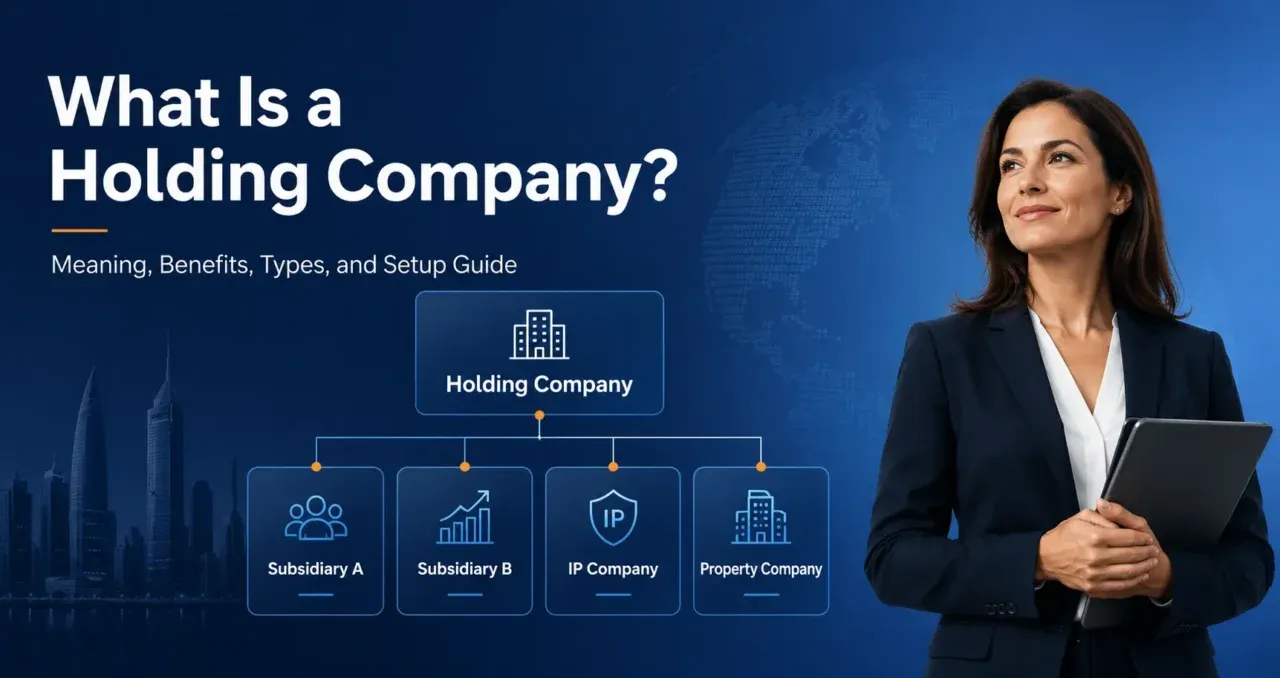
As assets begin to span multiple countries, some families consider establishing a holding company or a centralized ownership structure.
The idea seems reasonable: rather than owning each asset directly, the family uses a legal entity to hold its investments.
In appropriate circumstances, this structure can support governance, clarify ownership rights, organize investments, and facilitate the transfer of control.
However, a holding company does not automatically eliminate tax obligations, beneficial ownership disclosure requirements, or legal restrictions in the country where the assets are located.
Transferring assets from an individual to a company may also give rise to transaction costs, taxes, or other consequences.
A structure well designed for governance purposes may not necessarily be optimal for succession.
A structure that facilitates business operations may not suit assets held for personal use.
The question, therefore, is not whether the family should own a holding company.
It is:
“What specific problem would be better addressed by holding assets through a legal entity rather than owning them directly?”
If that question cannot be answered, adding a company may simply create another layer of administration and compliance.
6. Complexity has a cost, even without a crisis
Suppose a family owns international assets with a total value of 10 million USD.
They spend approximately 30.000 USD each year on accounting, reporting, legal advice, entity maintenance, and cross-border governance obligations.
This is a hypothetical figure for illustration, not a standard fee.
This cost is equivalent to 0,3% of total assets each year.
If it remains unchanged for 20 years, the total nominal cost is 600.000 USD, excluding inflation or the time value of money.
That expenditure may be entirely reasonable if the structure helps the family significantly reduce risk, protect ownership rights, and support business operations.
But if multiple legal entities are maintained solely because of disconnected investment decisions made in the past, the family needs to reassess their practical effectiveness.
An international asset has more than a purchase price and a sale price.
It also carries the cost of maintaining its ownership structure.
And that cost does not always appear in the profit reports for individual investments.
7. A global family does not necessarily need assets in every country
For a Vietnamese entrepreneur, expanding assets internationally can serve many legitimate objectives.
Vietnam may be where most business income is generated.
Dubai may be an investment market or a regional operating hub.
The United States may be where the family accesses educational, business, or long-term investment opportunities.
But not every family needs to own real estate, companies, and investment accounts in all three places at the same time.
An effective strategy should begin with the role each country plays in the family's plans.
Which country generates income?
Which country helps diversify asset risk?
Which country serves residence and education needs?
And more importantly, who will manage those assets over the next 10 or 20 years?
If a country serves no clear objective, a presence there may not truly be necessary.
For families with substantial assets, reducing unnecessary structures can sometimes be just as valuable as finding a new investment market.
8. International assets need a map, not just a portfolio

A conventional asset portfolio shows what the family owns and how much it is worth.
But an international asset map needs to answer additional questions:
Who are the legal and beneficial owners?
Where do the assets generate cash flow?
In which countries might tax and reporting obligations arise?
Who has the authority to decide on a sale, mortgage, or transfer?
What happens if the owner dies, loses legal capacity, or changes their place of residence?
These questions are not reserved for families with hundreds of millions of USD.
They can become important as soon as an entrepreneur begins to own substantial assets in a second country.
Asset diversification is the process of spreading risk. International asset governance is the process of ensuring that those assets can still be controlled, used, and transferred.
These two processes must go hand in hand.
A family may own assets in three countries yet still depend entirely on a single person to manage them.
In that case, the greatest risk does not necessarily lie in Vietnam, Dubai, or the United States.
It lies within the family's own governance structure.
The final question, therefore, is not:
“In how many countries should the family own assets?”
It is:
“If the person who built the wealth no longer manages it directly, will what they leave behind continue to offer the family freedom and opportunity — or become a system of obligations that the next generation must find a way to untangle?”
A global family is not defined by the number of countries in which it owns assets.
The true value lies in the ability to turn those assets into stability, freedom of choice, and a legacy that can be carried forward across generations.
EMMAI GLOBAL
International Analysis & Strategy
From Vietnam to Global
This article is for reference only and does not constitute legal advice. Regulations may change.

Family
I want to prepare the best for my children. But that does not mean they have to choose it.
Global families
How many countries does a global family need?

Global families
Obtaining a residence card is only the first step: How can you maintain immigration rights for the whole family?
Global families
How do a family’s taxes change after obtaining a green card or residence abroad?